Magnesium and sleep: the calm, honest version
Magnesium has gone from health-shop obscurity to one of the most-searched wellness ingredients in the country. As with anything that popular, the truth sits somewhere between 'miracle' and 'marketing'. Here's the calm version.
Why everyone's suddenly talking about magnesium
Magnesium is involved in hundreds of processes in the body, including several tied to relaxation, muscle function and the sleep-wake cycle. A meaningful share of people don't get enough from diet alone, which is part of why interest has exploded — searches for magnesium have climbed sharply year on year.
It also has a reassuring, 'natural, not-a-drug' feel, which makes it an appealing first step for people who'd rather not reach for stronger sleep aids.
What the evidence actually says
Here's the honest bit. For oral magnesium, reviews suggest modest benefits for sleep quality and relaxation, particularly in people who are low in it to begin with — real, but smaller than the hype implies. The effect is gentle, not sedative.
For topical magnesium sprays specifically, the science on how much is absorbed through the skin is genuinely limited and debated. That's why we're careful never to make medical claims — and why we frame our spray as a calming ritual, not a cure.
The different forms, briefly
- ◇Glycinate (bisglycinate): the form most associated with calm and sleep; gentle on the stomach.
- ◇Citrate: well absorbed, but can have a laxative effect — not ideal right before bed.
- ◇Threonate: studied more for cognition than sleep.
- ◇Topical (chloride) sprays: applied to the skin as part of a wind-down ritual; in the UK these are regulated as cosmetics, not medicines.
Why we made ours a ritual, not a pill
We deliberately chose a topical magnesium-and-lavender spray rather than another capsule. Three reasons: the oral supplement space is crowded and heavily regulated; the act of spritzing and slowly massaging it into your legs and arms is itself a calming, repeatable cue; and the scent becomes a nightly signal that the day is done.
In other words, even setting aside the debate about skin absorption, the ritual itself — the pause, the scent, the touch — is doing real work to help you wind down. We'd rather be honest about that than over-promise.
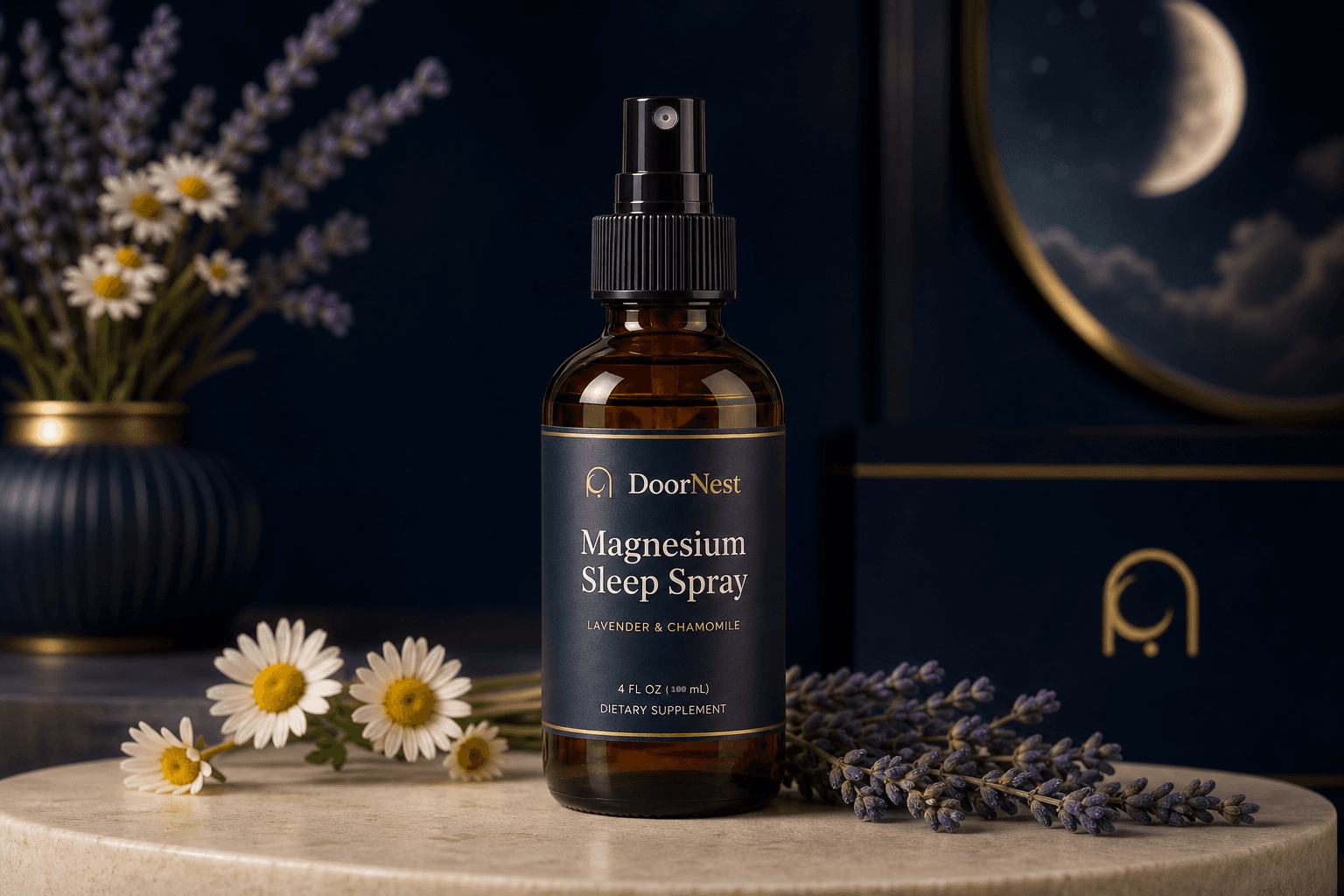
Magnesium Sleep Spray
The 30-second ritual that tells your body it's safe to sleep.
How people tend to use it
- ◇Apply around 30 minutes before bed, after a shower if you have one.
- ◇Spritz onto legs, arms or shoulders and massage in slowly — make it the calm part of your evening.
- ◇A mild tingle on first use is common and usually settles with regular use.
- ◇Be consistent: like most sleep tools, it works best as a nightly habit, not a one-off.
Magnesium isn't magic, and anyone who tells you it is, is selling you something. As one calming, pleasant step inside a consistent wind-down routine, though, plenty of people genuinely wouldn't go to bed without it.
Common questions
Does magnesium help you sleep?
Evidence suggests oral magnesium offers modest benefits for sleep quality and relaxation, especially in people who are low in it. The effect is gentle rather than sedative, and works best as part of a consistent routine.
Does magnesium spray absorb through the skin?
The science on how much magnesium is absorbed through the skin is limited and debated. We therefore present our spray as a calming wind-down ritual rather than a treatment, and make no medical claims about it.
What is the best form of magnesium for sleep?
Glycinate (bisglycinate) is the form most associated with calm and sleep and is gentle on the stomach. Citrate can have a laxative effect, and threonate is studied more for cognition. Topical sprays are used as a ritual rather than a supplement.
This article is general wellness information, not medical advice. DoorNest products are comfort and wellness products, not medicines, and are not intended to diagnose, treat, cure or prevent any condition. If sleep problems persist, please speak to your GP.